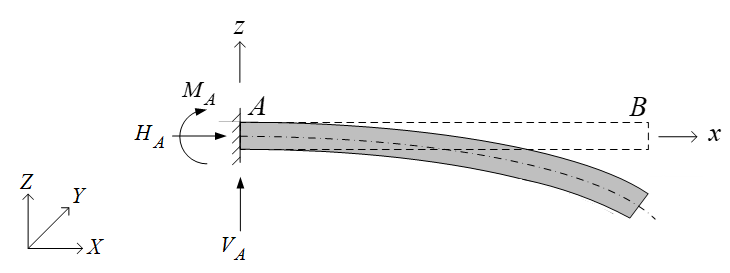
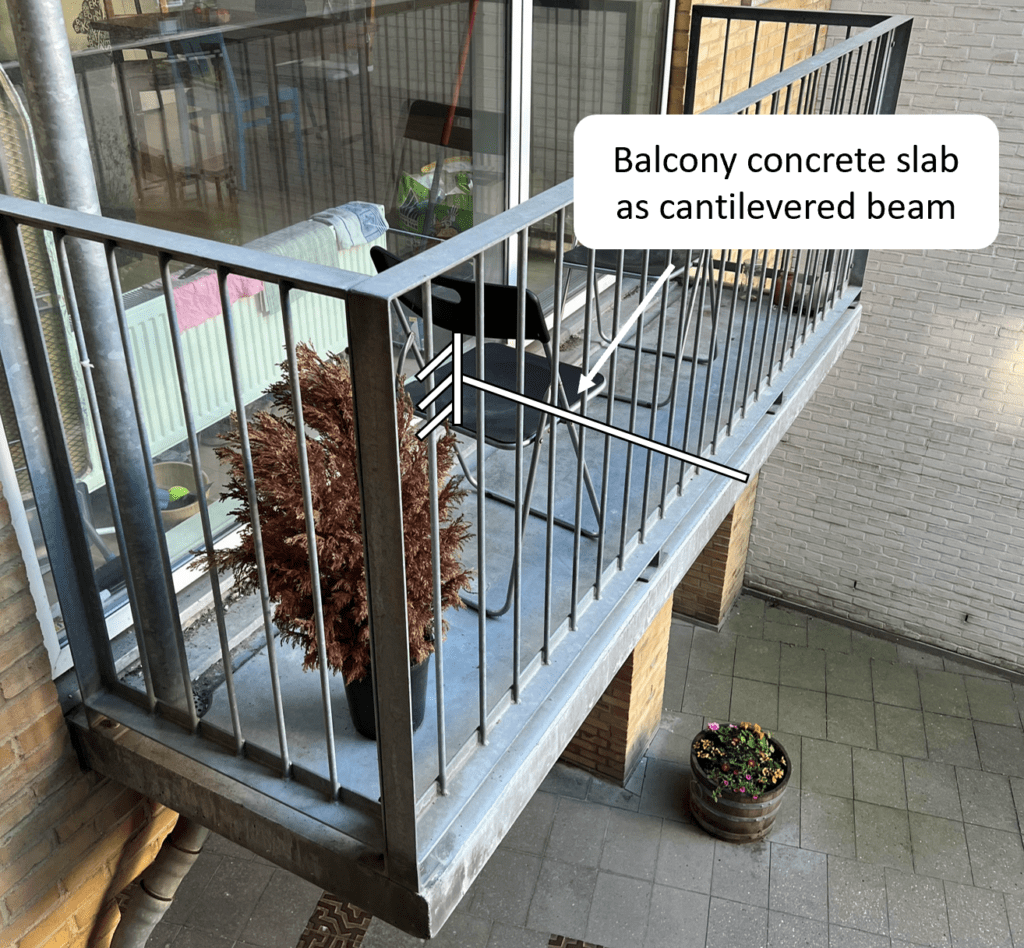
A cantilever beam is a structural member that is fixed at one end and free at the other, allowing it to extend outward without additional vertical supports. The fixed end anchors into a rigid support such as a wall or column, which resists the forces created by the load on the projecting section. When weight is applied to the cantilever, the beam experiences compression in the upper fibers and tension in the lower fibers, creating a bending moment that must be resisted at the fixed support. Engineers design cantilevers using materials such as reinforced concrete, steel, or engineered wood to handle these stresses safely. Cantilever systems are commonly used in balconies, overhangs, bridges, and sign supports because they allow structures to extend outward while keeping the space below unobstructed.
Week 3 – Structural Truss
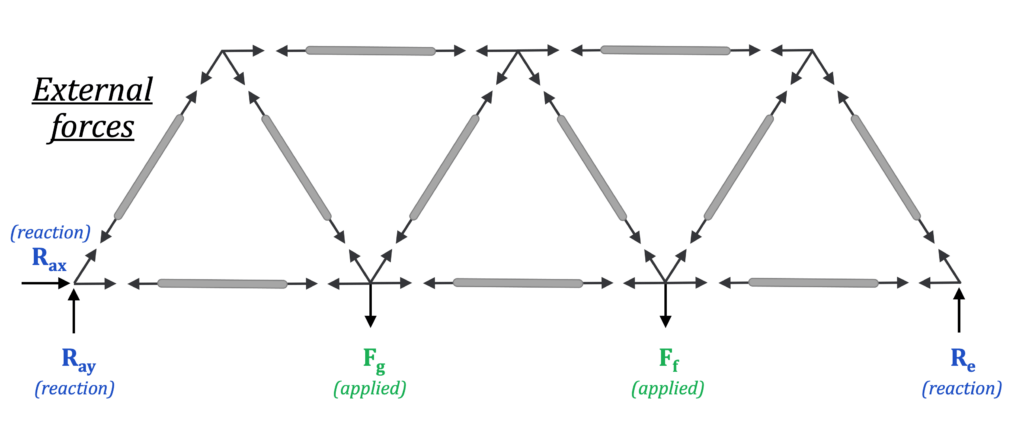
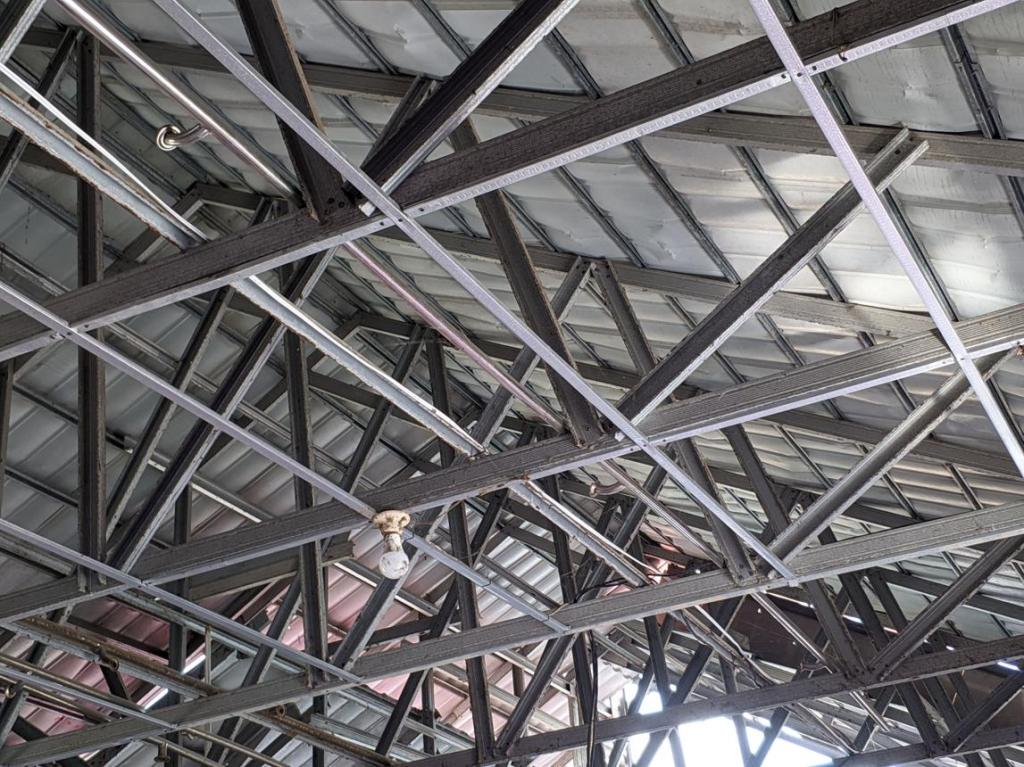
A truss is a structural framework made of interconnected members arranged in triangular shapes. The triangular geometry makes trusses extremely strong and efficient because triangles maintain their shape under load and distribute forces through the structure. When weight from a roof, bridge deck, or other load is applied, the forces are transferred through the truss members as either tension (pulling) or compression (pushing). Instead of bending like a solid beam, each member primarily carries axial force, which allows the structure to span longer distances while using less material. Because of this efficiency, trusses are commonly used in roof systems, bridges, and large open spaces where interior supports would be undesirable.
Week 4 – Shear Wall
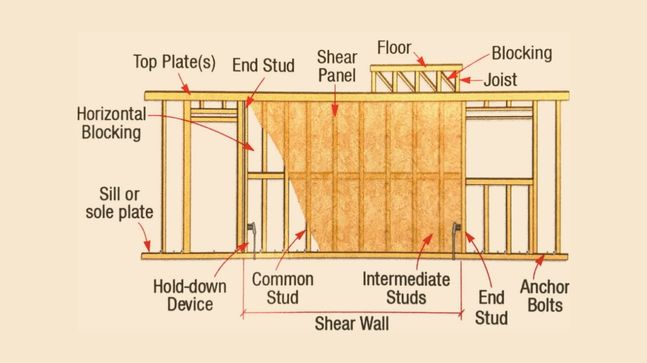
A shear wall is a vertical structural element designed to resist lateral forces, such as wind or earthquakes, that push against a building from the side. Unlike beams and columns, which primarily carry vertical loads, shear walls provide stiffness and stability by preventing a structure from swaying or twisting. When lateral forces act on a building, the shear wall transfers these forces down through the structure and into the foundation. Shear walls are often made from reinforced concrete, masonry, or wood framing with structural sheathing such as plywood or OSB. In many buildings, shear walls are located around stairwells or elevator cores, where they form a rigid central spine that stabilizes the entire structure.
Week 5 – Moment Frame
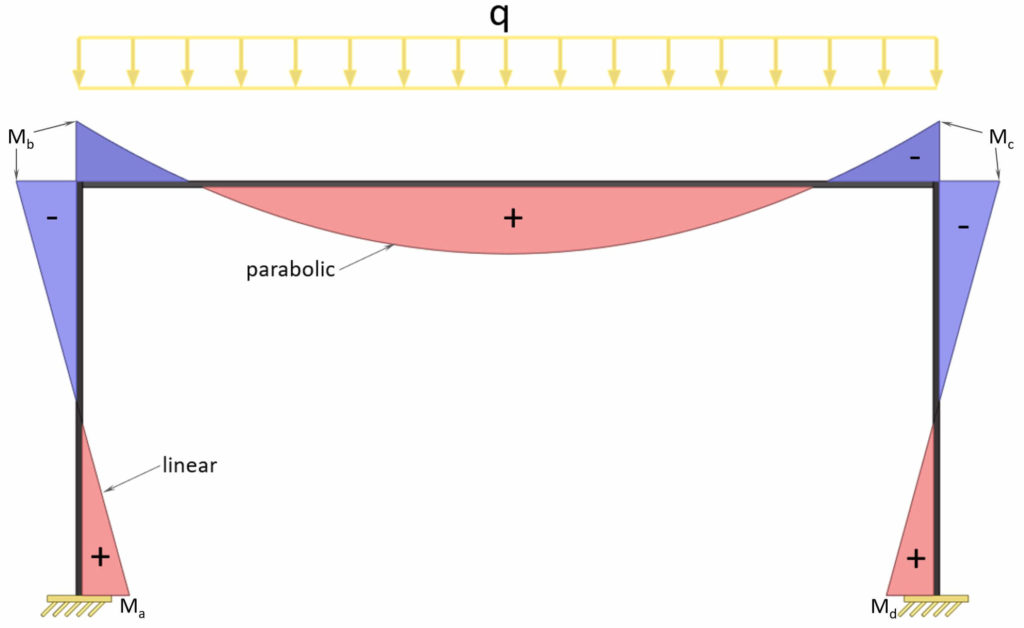
A moment frame is a structural system that resists lateral forces such as wind or earthquakes through rigid connections between beams and columns. Unlike simple beam-column connections that allow rotation, moment frame joints are designed to be stiff so that the beam and column act together as a single unit. When lateral forces push on the building, the rigid joints transfer bending moments through the frame, allowing the structure to resist deformation without relying on diagonal bracing or solid walls. This allows architects to create buildings with large open spaces and fewer walls, which is why moment frames are commonly used in steel buildings, parking garages, and commercial storefronts. The strength of the system comes from the stiffness of the beam-column connections and the ability of the members to resist bending.
Week 6 – Pile Foundations
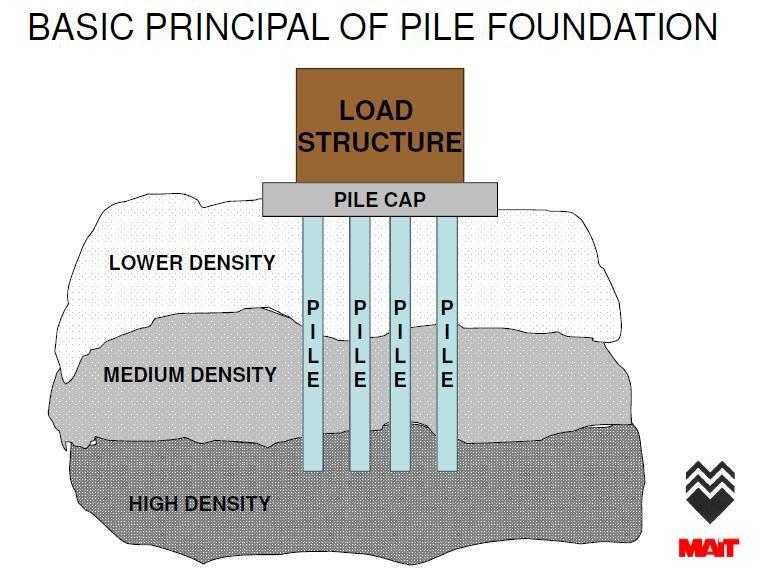
A pile foundation is a type of deep foundation used when the surface soil is too weak to support the weight of a structure. Instead of relying on shallow footings near the ground surface, piles are long columns made of steel, concrete, or wood that are driven or drilled deep into the ground until they reach stronger soil layers or bedrock. The structural loads from the building travel down through the columns and foundation system into the piles, which transfer the forces either through end bearing at a strong layer or through skin friction between the pile surface and surrounding soil. This system allows heavy structures such as skyscrapers, bridges, and waterfront buildings to remain stable even when built on soft or loose ground.
Week 7 – Load Tracing, moving from cables to trusses
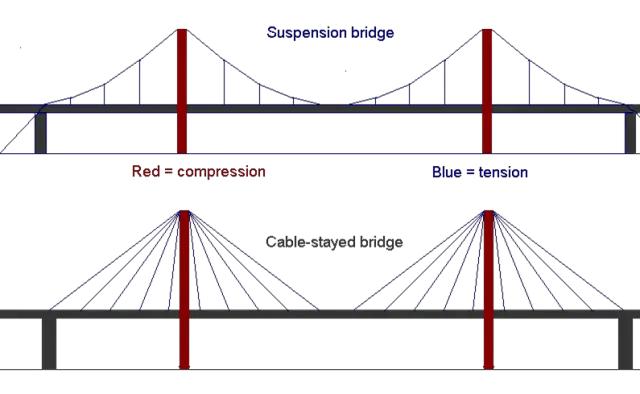
This week’s topic focuses on load tracing, which means following how forces move through a structure and into the ground. I chose to compare cables and trusses because they carry loads in very different but efficient ways. Cables can only resist tension, so when weight is applied they stretch into a curved shape and transfer the load to anchors or towers. This is why suspension bridges and cable-supported roofs use flexible hanging members. Trusses, on the other hand, are rigid frameworks made of triangular members that distribute loads through a combination of tension and compression. Some members are being pulled while others are being pushed, allowing the truss to span long distances with minimal material. What interests me is how both systems achieve strength through geometry rather than mass—cables through curvature and trusses through triangles. By tracing the load path, it becomes clear that structural form directly controls how forces travel.
Week 8 – Horizontal Spans, Floor Beams and Girders
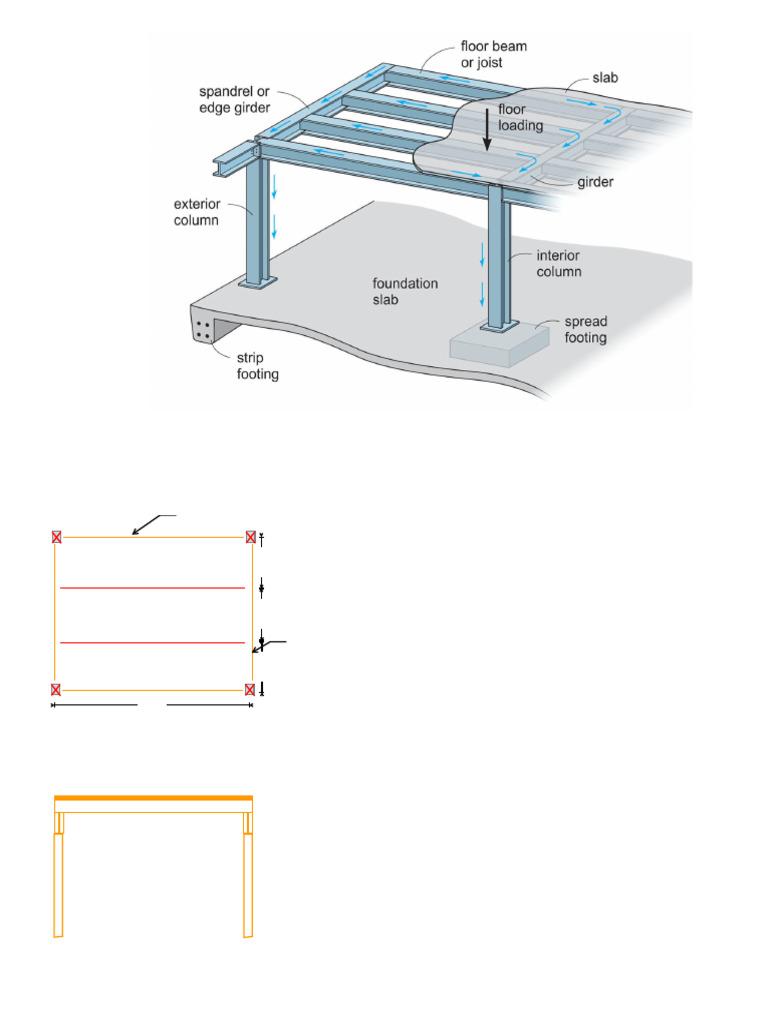
This week’s topic focuses on load tracing within horizontal spans, specifically how floor systems carry weight across a building. I chose beams and girders because they are the main structural members that transfer loads from floors to columns. When people, furniture, or equipment place weight on a floor slab or deck, that load first moves into smaller floor beams. The beams then transfer the force into larger girders, which carry the accumulated load to columns and finally down into the foundation. This creates a clear structural chain from the surface people use every day to the ground below. What interests me is that most of this system is hidden behind ceilings and finishes, yet it is constantly working to safely support everything above it. Horizontal spans are important because they allow open usable space while efficiently directing gravity loads through the structure.
Week 9 – Systematics
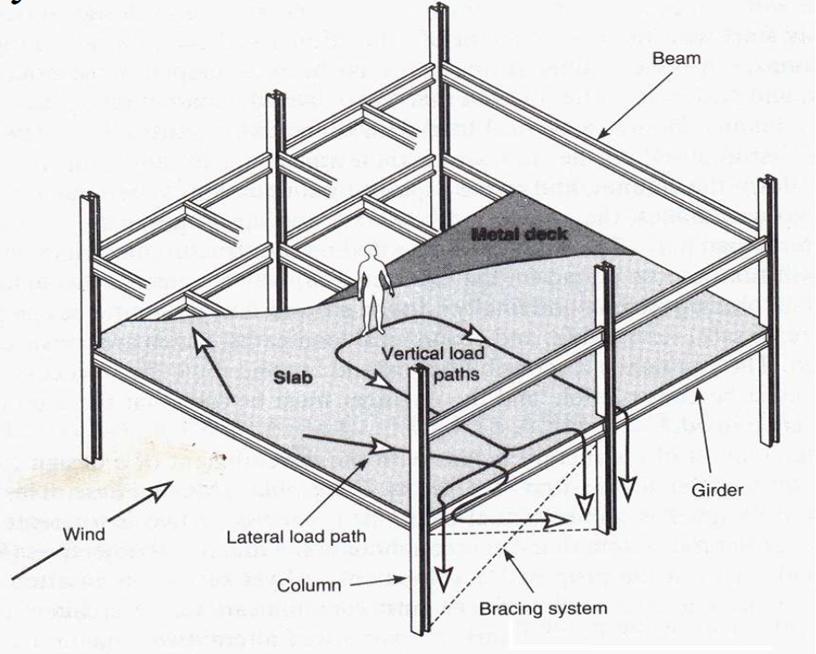
This week’s topic focuses on systematics, meaning how individual structural elements combine to create one complete structural system. Instead of looking at a single beam or column, I looked at how beams, columns, slabs, and shear walls all work together to support a building. Gravity loads from floors and roofs move into beams, then into columns, and finally into the foundation. At the same time, lateral forces such as wind or earthquakes are resisted by shear walls, braced frames, or rigid moment connections. What interests me is that no structural member works alone—each part depends on the others to create stability and strength. A building is really a coordinated network of elements, where every component has a role in carrying and transferring forces safely.
Week 10 – Lateral Forces
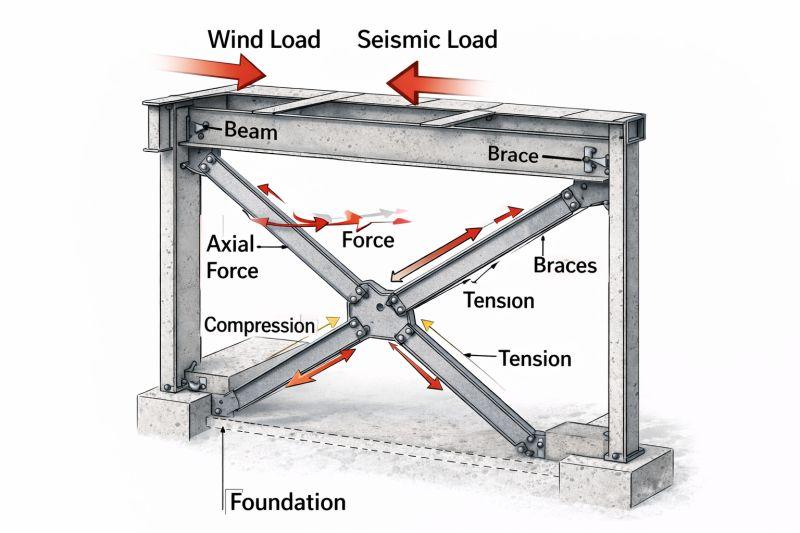
This week’s topic focuses on lateral forces, which are sideways loads caused mainly by wind and earthquakes. Unlike gravity loads that push straight downward, lateral forces can cause a building to sway, twist, or become unstable if not properly resisted. To handle these forces, engineers use systems such as shear walls, braced frames, and moment frames that add stiffness and strength to the structure. These elements transfer sideways forces through the building and down into the foundation. What interests me is that many lateral systems are hidden inside walls or building cores, yet they are some of the most important parts of the structure. Without them, tall buildings and structures in seismic areas would be unsafe.
Week 11 – Sustainability
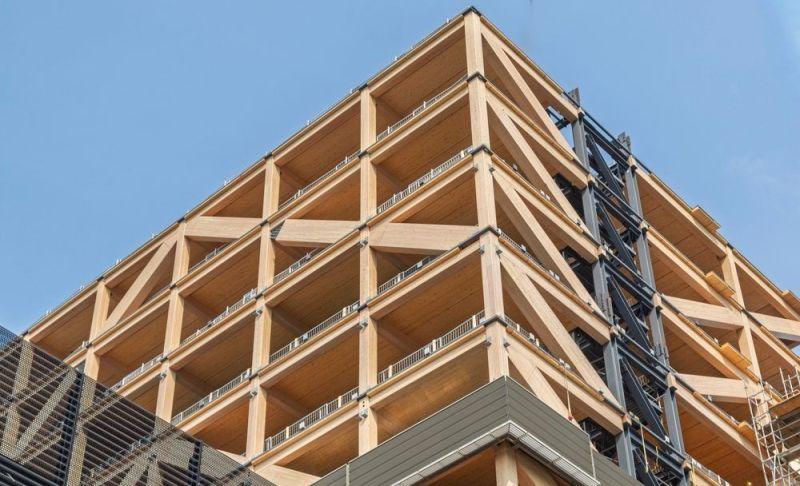
This week’s topic focuses on sustainability and how structural design can reduce environmental impact. The structural system of a building uses large amounts of materials, so engineers can improve sustainability by choosing efficient designs and lower-impact materials. Examples include mass timber, which stores carbon and uses renewable resources, recycled steel, and concrete mixes that reduce cement content. Engineers also create sustainable structures by optimizing spans, reducing unnecessary material, and designing buildings to last longer with less maintenance. What interests me is that sustainability is not only about solar panels or energy systems—it begins with the structure itself, because the frame of a building often represents a major portion of its environmental footprint.
Week 12 – Surface Active Systems
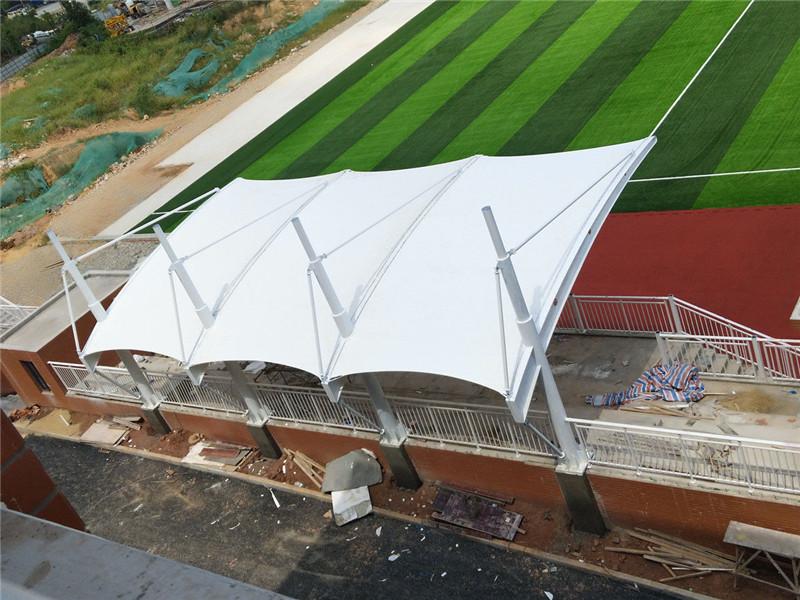
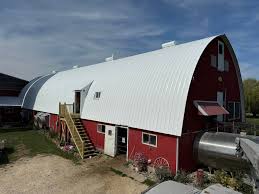
This week’s topic focuses on surface active systems, which are structures that carry loads mainly through the shape and surface of the material rather than through individual beams or columns. These systems use curved or tensioned surfaces so forces flow across the entire form as compression, tension, or membrane stresses. Examples include thin shell concrete roofs, domes, tensile fabric roofs, and folded plate structures. Because the shape is doing much of the structural work, surface active systems can cover large spaces with very little material. What interests me is how geometry becomes the main source of strength. Instead of relying on heavy members, the structure gains efficiency from curvature, folding, or tensioned surfaces.
Week 13 – Surface Systems
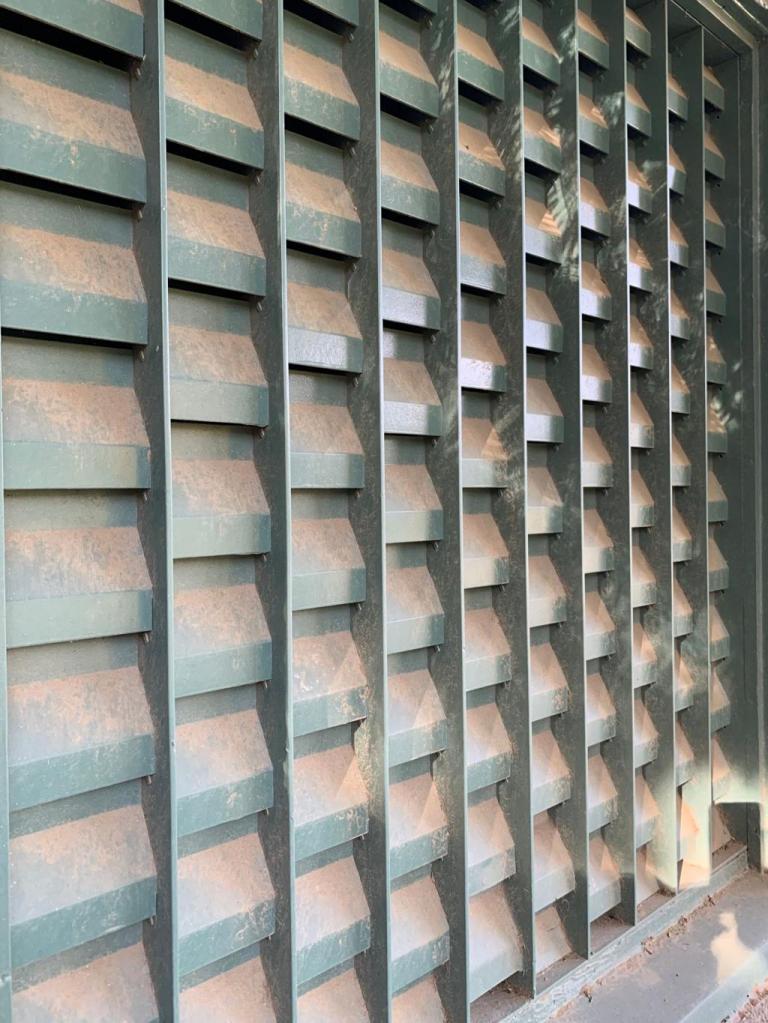
This week’s topic focuses on surface systems, which are the exterior or enclosing surfaces of a building that protect the interior from weather while also shaping the appearance of the structure. Unlike primary structural members such as beams and columns, many surface systems do not carry the main building loads, but they still play an important role in transferring their own weight and resisting wind pressure. Common examples include curtain walls, cladding panels, rainscreen facades, and roof skins. These systems attach back to the structural frame and must allow for movement caused by temperature changes, wind, and building deflection. What interests me is how a building’s outer skin can look lightweight and elegant while actually requiring careful engineering to remain secure and watertight.
Week 14 – Strength of Materials
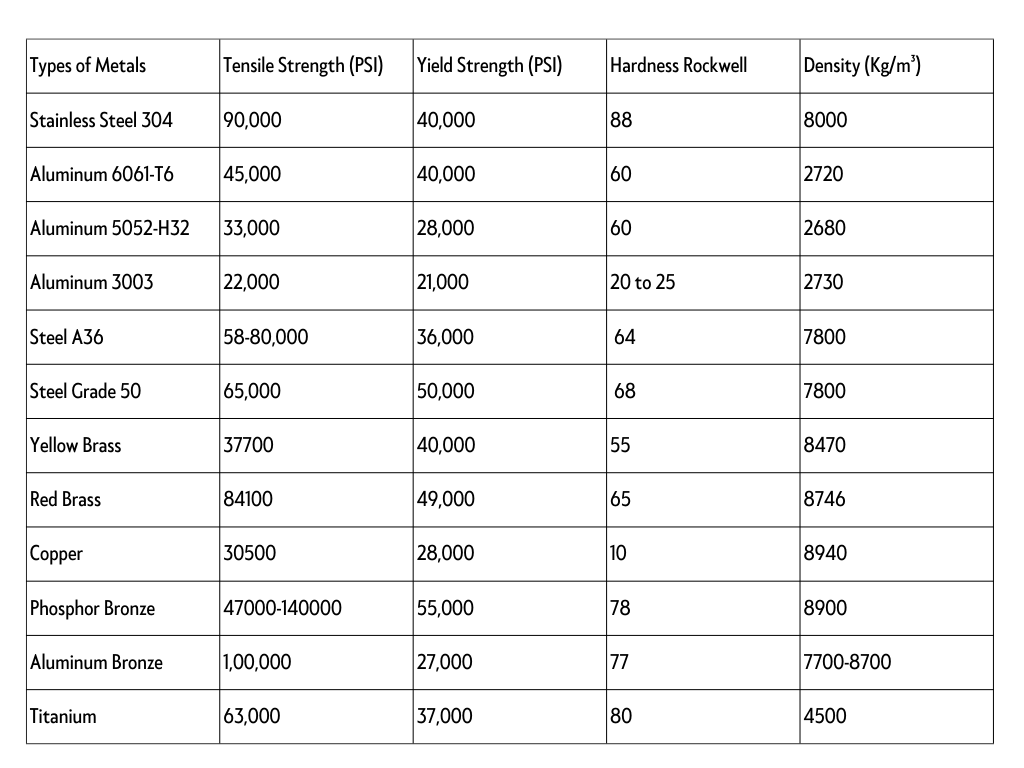
This week’s topic focuses on the strength of materials, which is the study of how materials behave when forces are applied to them. Structural materials such as steel, concrete, wood, and masonry each respond differently to tension, compression, shear, and bending. Steel is strong in both tension and compression, concrete performs very well in compression but is weaker in tension, and wood is lightweight with good strength depending on grain direction. Engineers must understand these properties so they can choose the right material for each structural member and predict how much load it can safely carry. What interests me is that two members with the same shape can perform very differently depending on the material they are made from. The success of a structure depends not only on design, but also on understanding material behavior.
Lars is a half Danish half American US Army veteran and current student at City College of San Francisco.
He is studying for a bachelors of science in construction management. This blog is for his architecture 127 class.
 Lars Nash ARCH 127 Structural Diary